A simple breakdown of how Generative AI thinks — step by step
Imagine asking a question to a Generative AI model like ChatGPT or Gemini.
You type in a sentence… Hit enter… And voilà — a thoughtful, well-structured response appears in seconds.
But what happens inside the model’s mind between the question and the answer? Let’s break it down. (And don’t worry — no PhD in AI needed.)
Think of it as a 4-step thinking loop. I created this visual to simplify how GenAI models “think.” Each stage reflects a cognitive step — like how a human might understand, recall, respond, and refine.
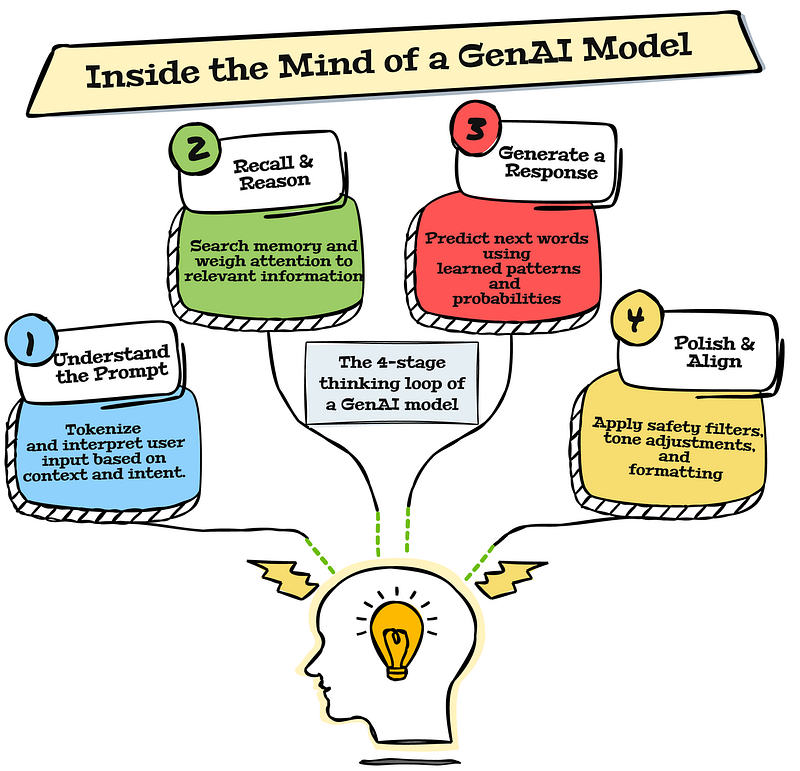
How Large Language Models think, step by step
- Understand the Prompt
Before anything else, the model reads and tokenizes your input — this means it breaks your sentence down into chunks it can understand. It then interprets the context and intent behind your words. Like how a friend first listens carefully before replying.
- Recall & Reason Next, the model digs into its vast memory — which isn’t like human memory, but more like patterns learned from massive training data. It weighs which past patterns are most relevant to your prompt and brings them forward. It’s like saying, “I’ve seen something similar before — here’s what usually follows.”
3. Generate a Response This is the creative moment. Using probabilities, the model begins to predict the next best words — one after another — until a full response is formed. It doesn’t “know” the answer. It constructs it from learned relationships between words. Think of it as assembling Lego blocks based on which ones tend to fit best together.
4. Polish & Align Finally, the model refines the output — adjusting for tone, structure, and sometimes even ethical or safety considerations. It ensures the response is aligned with user expectations and platform guidelines. It’s like reviewing your draft before sending an email — formatting, grammar, and tone check.
Why This Matters: Understanding this process isn’t just for engineers or AI researchers.
Whether you’re a product designer, marketer, teacher, or curious learner — this mental model helps you:
- Ask better prompts
- Know where GenAI might go wrong
- Appreciate the invisible effort behind those few seconds of output
Final Thought GenAI might seem magical — but under the hood, it’s a beautifully orchestrated loop of understanding, memory, prediction, and polish.
Now that you know the 4-stage thought cycle, Next time you get an AI-generated answer, you’ll know exactly how it came to life.